1842
An astronomer's blue paper
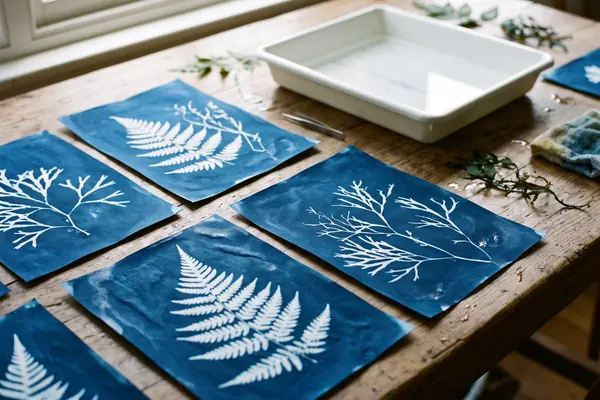
John Herschel found that paper treated with iron salts turned blue in sunlight and kept its image after washing. He called it the cyanotype.
Where it started doodledraftsman
A SHORT HISTORY
Every builder on a big job needed the drawings.
For decades, plans were copied by hand, one tracing at a time. Then drawing offices learned to copy them with sunlight, a sheet of coated paper and a bath of water, and the copies came out blue.
WHITE ON BLUE light, iron and water
Read an old printTHE SHORT ANSWER
The colour was not a style choice.
It came from iron salts turning Prussian blue.
1842
John Herschel found that paper treated with iron salts turned blue in sunlight and kept its image after washing. He called it the cyanotype.
Where it started1870s
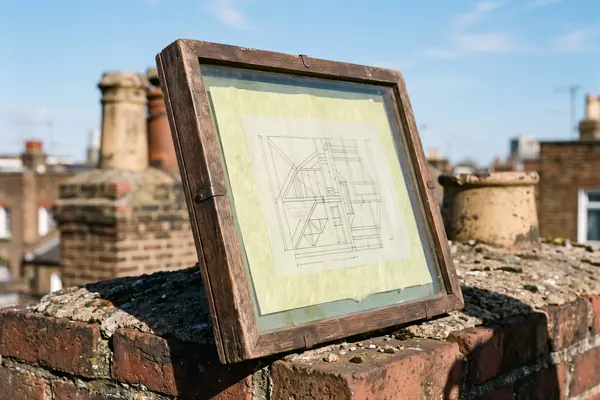
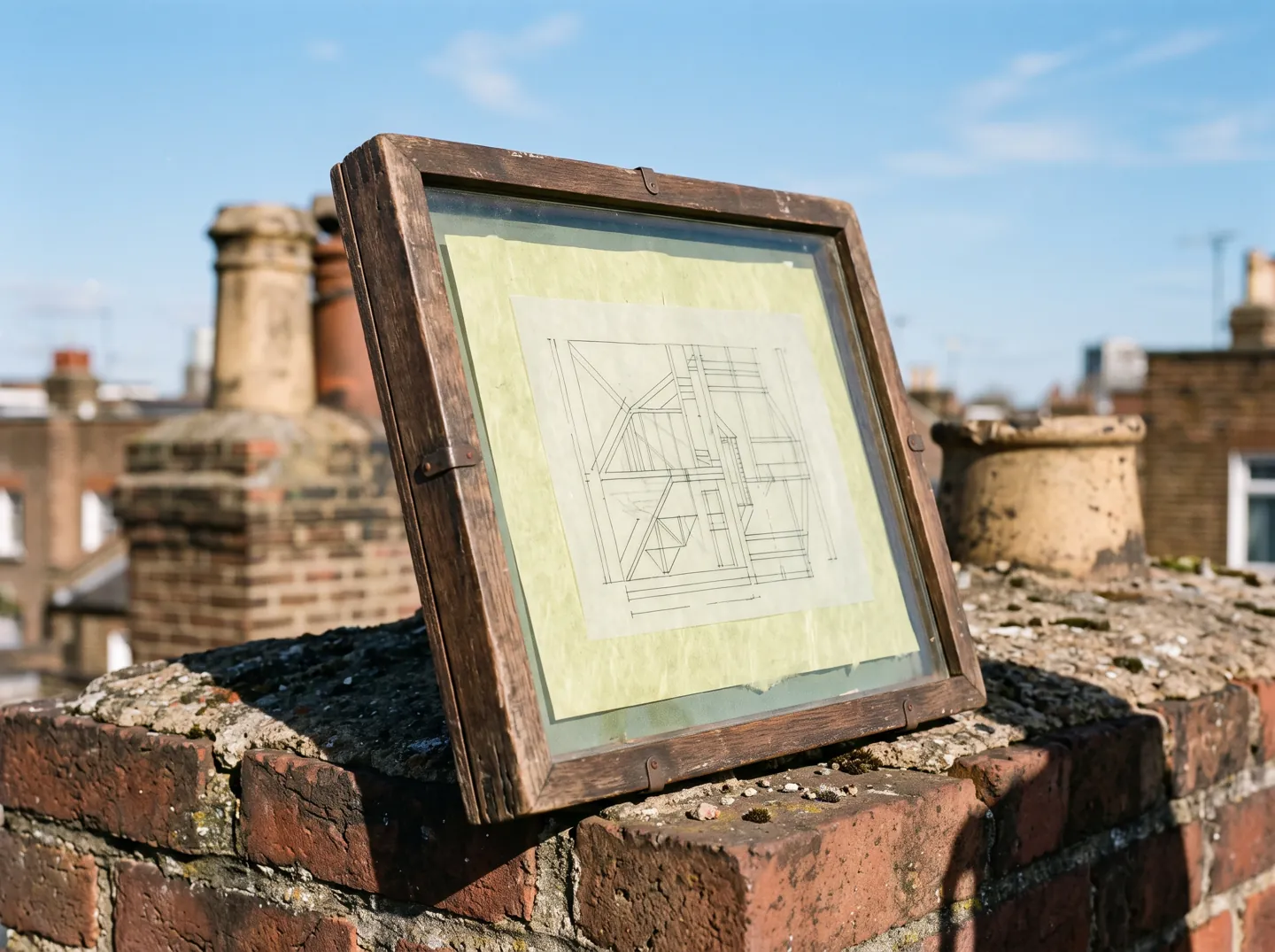
Plans were traced, laid on coated paper under glass and exposed to sunlight, often in frames on rooftops, then washed in water.
See the numbersTHE LOOK
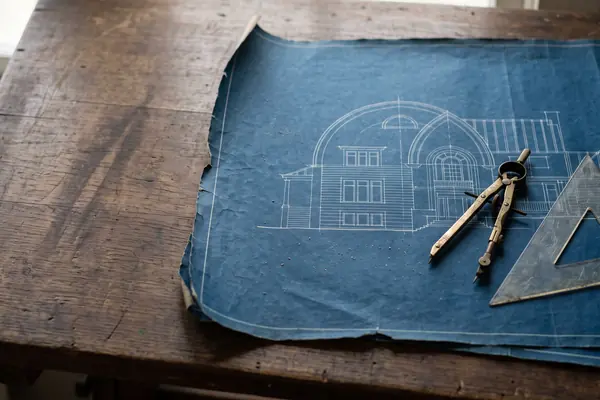
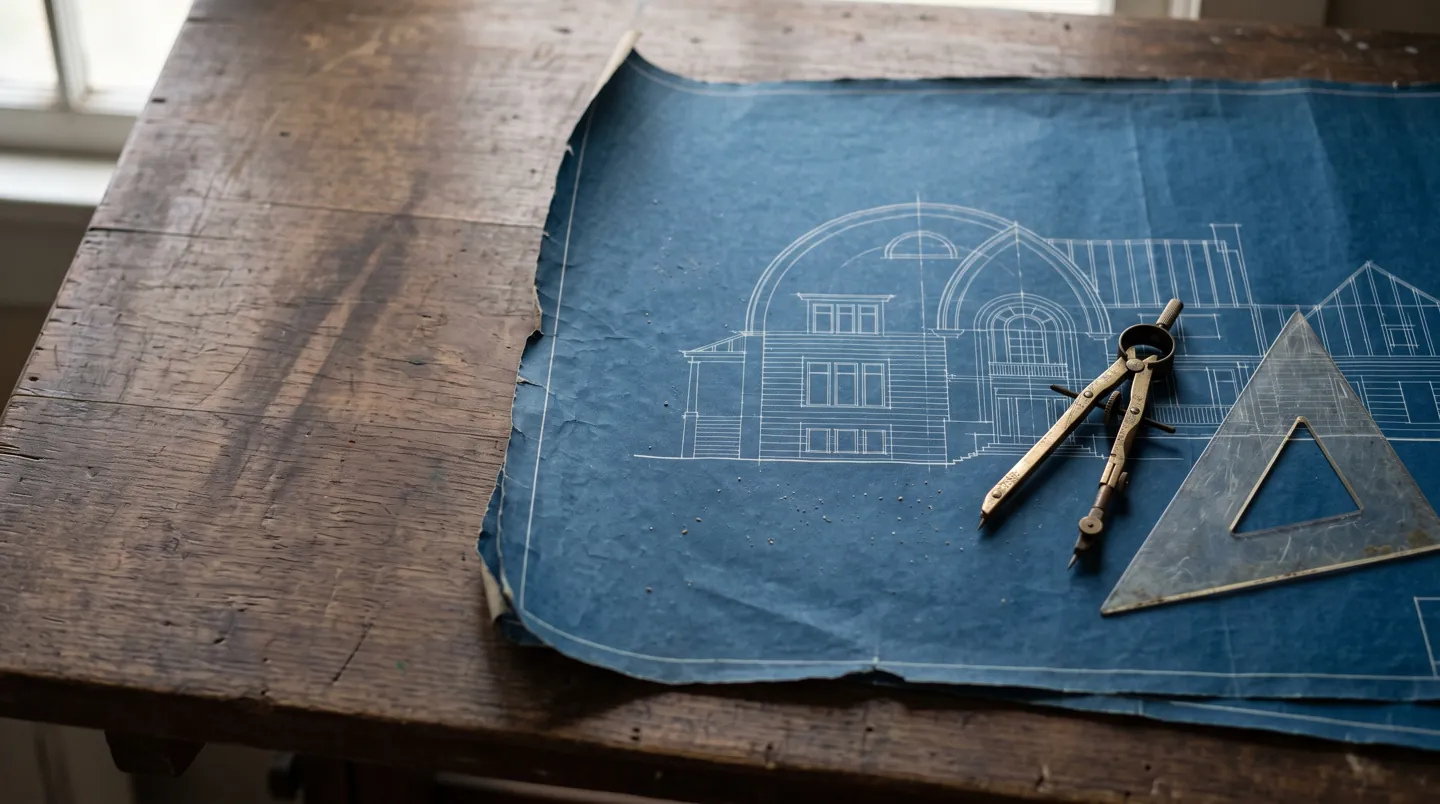
Because the light passed through the paper but not the ink, the drawing came out in reverse: white lines on a deep blue background.
Read an old print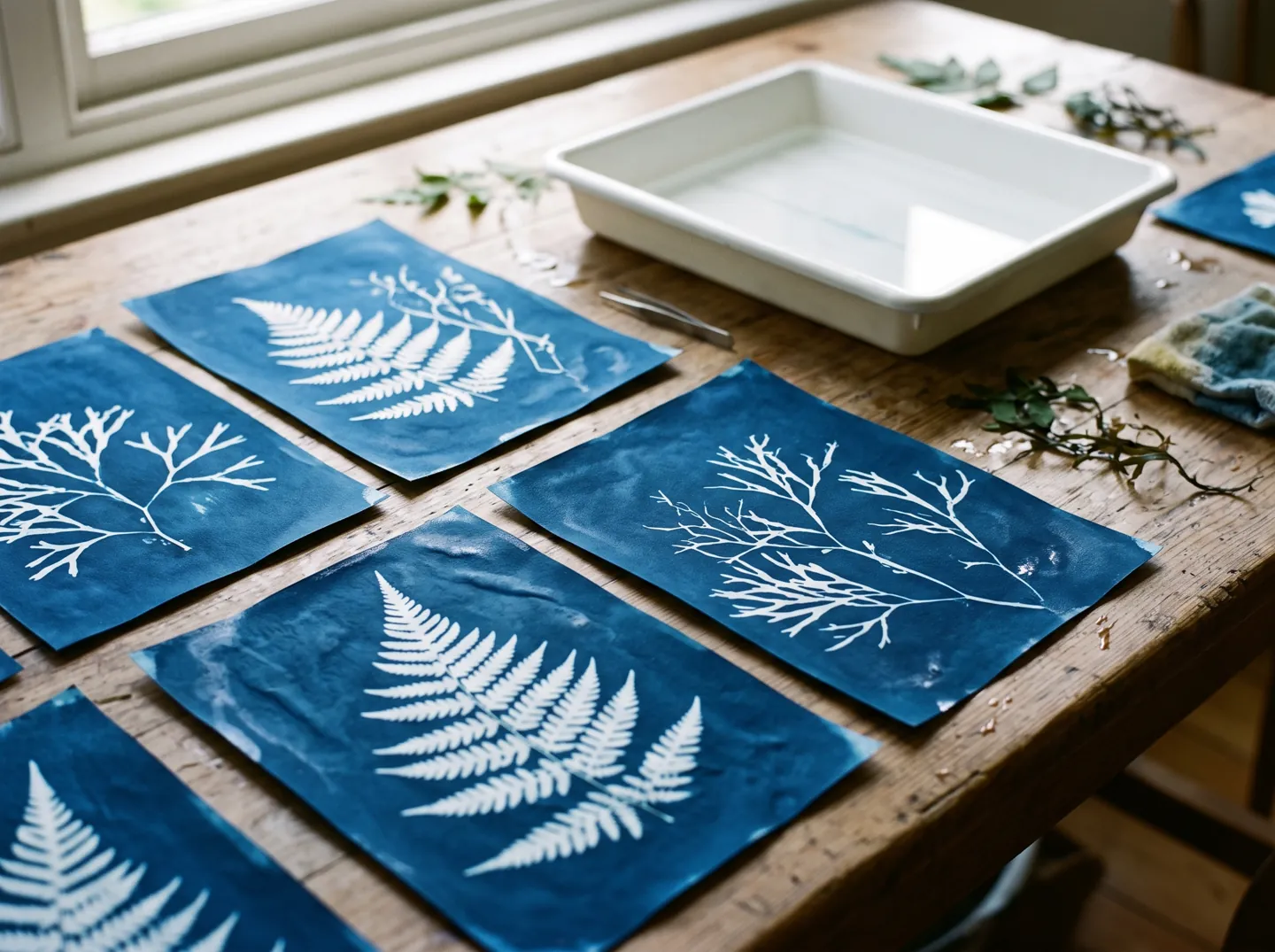
FOUR THINGS TO LOOK FOR
If you find old plans of a house, a ship or a machine, these clues from the conservation guide help you tell what kind of copy you are holding.
White lines on blue point to a blueprint. Blue lines on clean white point to the Pellet process.
Diazo backgrounds are never a clean white, which the guide calls the main clue for spotting them.
Drawings meant for copying were usually on tracing paper or tracing cloth, a starched cotton that let the light through.
Diazo prints are very light sensitive and fade and discolour quickly in light, so store them in the dark.
TWO NUMBERS WORTH KNOWING
One date for the chemistry,
one for how long a sun print took.
1842
Year Herschel noted his blue paper
Herschel wrote on 23 April 1842 that 'this paper will prove valuable'. It was not sold for copying plans until the 1870s, after his death in 1871.
THE DISCOVERY · SCIENTIFIC AMERICAN
10–40min
Time in the light for a cyanotype
The Natural History Museum describes exposing a cyanotype to light for between 10 and 40 minutes, then fixing it simply by washing in water.
THE EXPOSURE · NATURAL HISTORY MUSEUM
Scientific American notes that blueprint shops thrived for nearly a century, often on the top floors of office buildings where there was ample sunlight.
READ AN OLD PRINT
Old plans in archives and lofts were copied by several different processes. Pick what you see. The bar shows how early that process came into use for drawings.
Based on a conservator's guide to identifying copies of architectural drawings made before 1930. Dates are approximate and varied by country.
BEFORE THE BLUEPRINT
Before photo-copying, each copy of a drawing was traced by hand, which was slow and expensive. Engineers employed junior draughtsmen, known as tracing boys, to do the tedious copying.
Herschel's cyanotype was first used by botanists. Anna Atkins used it in 1843 for Photographs of British Algae, which the Natural History Museum describes as the first book printed and illustrated by photography. Drawing offices took it up in the 1870s.
Questions
Yes. The classic blueprint had white lines on a medium to deep blue ground. The blue is Prussian blue, formed when light-exposed iron salts in the paper react during the water wash.
The chemistry was discovered by the astronomer and chemist Sir John Herschel in 1842. Paris publishers Marion and Company began selling the paper for copying plans in the 1870s.
A drawing on translucent paper or cloth was pressed against the coated paper under glass and exposed to sunlight, later to arc lamps in machines. The print was then washed in water, which fixed the image.
The diazo process, also called dyeline, which gives dark lines on an off-white ground without wet processing. A conservation guide says it replaced blueprints by the 1950s; photocopies and digital drawings followed.
The word outlived the process. Today it means any detailed plan, though most architectural drawings are now produced digitally rather than as blue sun prints.
Updated
ABOUT THIS NAME
doodledraftsman.com is part of the DoodleSale portfolio. It isn't in an auction right now, but you can ask about leasing it.